


The Science of Enzymatic Cleaning: How Enzymes Remove Odors and Stains
Enzymatic cleaning products are becoming increasingly popular due to their effectiveness and eco-friendliness. This article explains how enzymes work, how they differ from conventional cleaning products, and why this technology effectively eliminates odors and organic stains.
What Are Enzymes
Enzymes are natural proteins that accelerate chemical reactions. They are found in all living organisms and participate in many processes, such as digestion or metabolism.
In cleaning products, enzymes are used to break down organic dirt. They can degrade substances that often cause stains and unpleasant odors.
There are different types of enzymes, and each of them acts on specific substances. Some enzymes break down proteins, others fats, and others help decompose starch.
For example, proteases act on protein-based stains, such as food residues or urine. Lipases help break down fats and oils. Amylases work with complex carbohydrates and starch.
Thanks to this specialization, enzymatic cleaners can effectively remove different types of stains.
How Enzymatic Cleaners Remove Odors
One of the main advantages of enzymatic cleaning is that it targets the source of the odor.
Conventional cleaners often work differently. They may remove part of the stain or temporarily mask the odor with fragrances. However, the molecules causing the unpleasant smell may remain on the surface.
When enzymes are used, the process is different. They identify the organic molecules responsible for the odor and begin breaking them down.
During this reaction, the molecules are decomposed into simpler compounds, such as water and carbon dioxide. As a result, not only does the odor disappear, but the cause of it is eliminated as well.
This cleaning method is especially effective for removing:
- Urine odor
- Pet odors
- Food odors
- Trash odors
- Organic stains
Once the source of the odor is broken down, bacteria can no longer use these substances as nutrients, preventing the smell from returning.
Why Enzymatic Cleaning Is Becoming Popular
Interest in enzymatic cleaners is growing for several reasons.
Firstly, these products provide deeper cleaning. Enzymes can penetrate porous materials such as carpets, textiles, or upholstered furniture, where particles causing odors often remain.
Secondly, enzymatic cleaners generally contain fewer harsh chemicals. This makes them preferable for households with children and pets.
Another advantage is eco-friendliness. Enzymes are natural substances that degrade over time without leaving harmful residues.
Moreover, enzymatic products often work effectively even at relatively low temperatures, making them versatile for various cleaning tasks.
Where Enzymatic Cleaners Are Used
Enzymatic cleaners are used in a wide range of applications, suitable for both home and professional cleaning.
They are most commonly used for carpets, furniture, and textiles, where organic stains can accumulate. They are also applied in kitchens, bathrooms, pet areas, and near trash bins.
For example, if a pet leaves a stain on the carpet, conventional cleaners may only remove the visible part of the dirt. However, residues deep in the fibers can continue to emit odor.
Enzymatic cleaners break down these residues, eliminating both the stain and the odor.
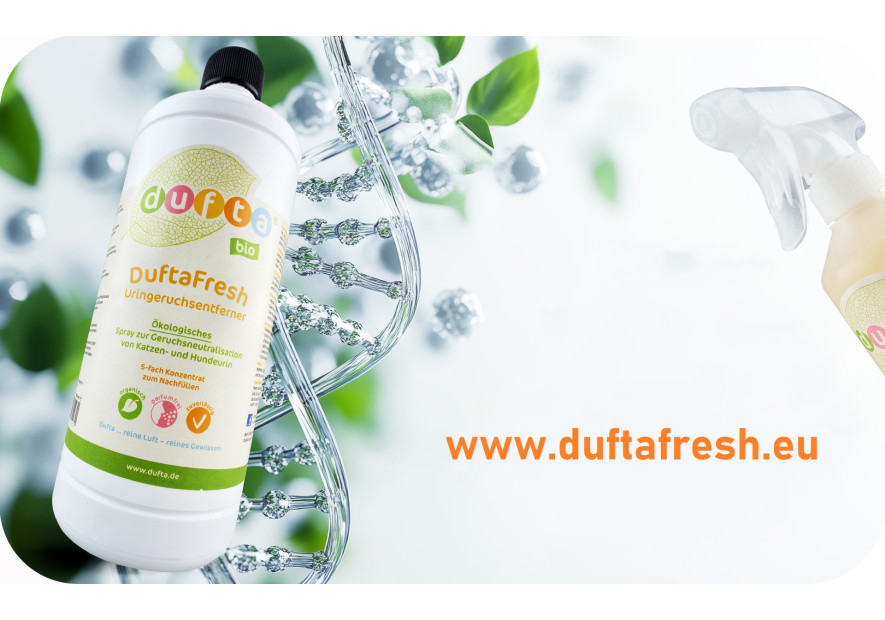
Dufta Enzymatic Odor Removers
An example of enzymatic technology in practice is Dufta odor removers. These products are designed to eliminate organic odors and stains in domestic settings.
The enzymes in these products work on the source of the odor, breaking down the organic substances that cause it. As a result, odors are not masked with fragrances but gradually disappear.
Such products can be used to clean carpets, furniture, textiles, and various surfaces prone to organic dirt.
In homes with pets, enzymatic cleaners are particularly useful because pet odors can penetrate deeply into materials and persist for a long time.
The Future of Cleaning Technologies
Enzymatic cleaning continues to develop actively. Modern biotechnology research allows the creation of new enzyme combinations, improving cleaning efficiency.
Every year, safer and more eco-friendly cleaning solutions emerge, driven by growing interest in products that maintain cleanliness without excessive use of harsh chemicals.
Enzymatic technologies have already become an important part of modern cleaning and are likely to see wider use in the future.
For many, these products offer a convenient way to keep their homes clean and fresh, especially when dealing with stubborn organic stains and odors.
