
Dog allergies: can you live with a dog if you are allergic?

Life with a dog means walks, games, hair on your favourite armchair, muddy paw prints after a rainy outing, and the remarkable ability to occupy exactly the part of the sofa where you were about to sit.
But when someone in the household develops a dog allergy, things become more complicated. A runny nose, irritated eyes, skin reactions and, in some cases, breathing problems can raise a difficult question: does being allergic mean you have to give up the idea of living with a dog?
Not necessarily. The first step is understanding what actually causes dog allergies and why simply getting rid of visible dog hair is usually not enough.
Dog allergies are not just about dog hair
We often talk about being "allergic to dog hair", but that description is not entirely accurate. Allergic reactions are triggered by certain proteins found, among other places, in a dog's saliva and skin particles. The coat can then act as a carrier, helping those allergens spread around the home.
A dog licks itself, leaving saliva on its coat. Its skin is constantly renewing itself, releasing microscopic particles into the environment. The dog runs around the house, lies on the carpet, climbs onto the sofa and shakes itself after a walk, gradually distributing tiny particles throughout the home.
So the absence of visible clumps of dog hair does not mean the absence of allergens.
They can be present in household dust, carpets, upholstered furniture, dog beds, fabrics and other surfaces. Dogs can also bring outdoor dust, soil particles and pollen indoors on their paws and coat after a walk.
Focusing only on the hair you can see is therefore a little like mopping up a puddle without turning off the tap.
Are there dogs that do not cause allergies?
Some breeds do shed considerably less than others. Poodles, Bichon Frises and Schnauzers, for example, are frequently mentioned when people look for dogs that may be more suitable for allergy sufferers.
But a dog that sheds very little and a dog that cannot trigger an allergy are not the same thing.
All dogs produce allergenic proteins, while individual reactions can vary considerably from person to person. Someone may even react differently to two individual dogs of the same breed.
For that reason, the popular term "hypoallergenic dog" should not be taken literally, and certainly not as a guarantee that an allergic reaction will not occur.
If you have already been diagnosed with a dog allergy or have asthma, it is sensible to discuss getting a dog with an allergist. Spending plenty of time with the individual dog you are considering before making a final decision can also be useful.
Why removing dog hair is not enough
Dog hair is easy to see, so naturally it attracts most of our attention. It gathers in corners and sticks to clothes, sofas and carpets.
Much of what accumulates in a home, however, is considerably smaller.
Dust, skin particles and the allergens associated with them can settle on floors and furniture and accumulate in carpets and other textiles. As people and animals move around the house, some fine particles can become airborne again.
This is why regular cleaning in a home with a dog should extend beyond the floor to the places where the animal spends much of its time: carpets, upholstered furniture, dog beds and the areas surrounding them.
It is also worth considering more than how effectively a vacuum cleaner picks up visible dog hair. What happens to fine dust once it has entered the vacuum matters too.
How can water filtration help?
One approach to dealing with household dust is filtration using water.
With the AquaBOX system used in THOMAS vacuum cleaners, dirt entering with the airflow is exposed to atomised water. The particles are directed into the container, where they are bound in the water.
After vacuuming, the collected dirt is disposed of together with the dirty water. This is fundamentally different from emptying a container filled with dry fine dust.
For dog owners, the principle is particularly useful because it combines several cleaning tasks: visible pet hair and everyday dirt are collected while fine dust and allergens are bound in water.
It is important, however, to keep the capabilities of any household appliance in perspective. A vacuum cleaner does not treat allergies and cannot make a home completely allergen-free. Its role is much more practical: to remove dirt effectively and help reduce its accumulation in the home.
A lot of the problem is not on the floor
If your dog enjoys sleeping on the sofa or stretching out on the carpet, regularly cleaning hard floors alone will not be enough.
Textiles can gradually accumulate hair, dust and other particles between their fibres. Carpets, upholstered furniture, throws and dog beds therefore deserve particular attention.
Some textiles can be washed, while others benefit from occasional deeper wet cleaning.
In washing vacuum cleaners with the AQUA+ system, for example, water or a cleaning solution is applied to the surface being cleaned. This helps loosen dirt from the fibres, after which the resulting dirty water is immediately extracted back into the machine.
This type of cleaning is particularly relevant for carpets and upholstered furniture, precisely the surfaces many dogs choose as their favourite places to relax.
What else can help reduce allergens at home?
Even a good vacuum cleaner is only one part of maintaining a home shared with a dog.
Regular grooming can help remove loose hair before it spreads around the house. If the owner is allergic, it is preferable for another member of the household to handle brushing whenever possible.
After walks, wiping the dog's paws and, when necessary, its coat can help remove outdoor dirt and pollen. Dog beds, blankets and other washable items should also be cleaned regularly.
It is worth paying attention to areas that are easily overlooked during a quick clean: underneath furniture, carpets, sofa upholstery and the dog's favourite resting places.
For people with significant allergies, it may also be worth discussing the organisation of the home with a doctor, for example, whether the dog should be kept out of the bedroom.
And if allergy symptoms have already developed, cleaning should not replace medical advice. This is particularly important if symptoms include coughing, difficulty breathing or other pronounced allergic reactions.
Dogs and allergies can sometimes coexist under one roof
A home shared with a dog cannot and does not need to become a sterile environment. A much more realistic goal is to prevent hair, dust and allergen-containing particles from accumulating unchecked in the places where people spend most of their time.
That requires a routine rather than a single solution: grooming the dog, cleaning its paws after walks, regularly washing bedding and textiles, and cleaning floors, carpets and upholstered furniture.
Water filtration can be one part of that routine because it allows dirt to be collected while fine dust and allergens are bound in water rather than remaining as dry dust.
Meanwhile, the dog can carry on being a dog: racing through the house, coming home from walks, begging for treats and occasionally taking possession of the entire sofa.
Because good cleaning is not about removing life from your home. It is about removing what everyday life leaves behind.

THOMAS AQUA+ ALLERGY &...
Using the Allergy &...
Using the Allergy & Family vacuum cleaner will not only make your home sparkling clean, but also the air will be fresh and free of allergens. The Aqua+ water filter effectively binds 99.9% of dust, pollen, and mites in the air, so that in addition to cleanliness, a healthy environment can be...
Price €319.00 Regular price €385.00
THOMAS CYCLOON HYBRID PET &...
Hybrid bagless vacuum...
Hybrid bagless vacuum cleaner – the latest innovation from Thomas. The device combines both a dust collector (EasyBox-DryBox) and a water filter (Aqua-Box), allowing the user to freely choose between quick and effective cleaning using the dust collector or thorough cleaning using the water filter...
Price €295.00 Regular price €351.00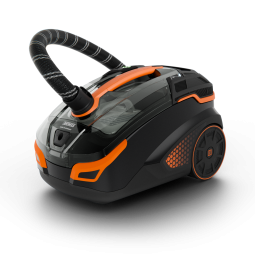

THOMAS PET & FAMILY PRO...
Flagship wet & dry...
Flagship wet & dry vacuum cleaner for families and pet homes. DRY-BOX works like a powerful cyclone: quickly collects dust, debris and pet hair. For deep cleaning switch to AQUA-BOX: the water “wall” binds dust, allergens and odors, making the air fresher. Active solution delivery by the pump...
Price €479.00 Regular price €539.00